Metal roof · Warranty
10 Important Things to Consider When Choosing a Metal Roof or Metal Façade
- Published:
- Author: BRAVO INTERNATIONAL RO
- 5 min read

When building or renovating a house, choosing the right roofing material is one of the most important decisions. A properly selected metal roof should provide long-term protection against the elements, last for decades, and blend harmoniously with the architecture of the building.
In recent years, metal roof tile systems, standing seam roofing, and metal façade panels have become increasingly popular due to their durability, lightweight structure, and design flexibility. These solutions are used both for individual homes and for modern buildings or complex architectural projects.
However, for homeowners undertaking their first construction or renovation project, the differences between materials, finishes, and roofing systems can be difficult to understand. Selecting a roofing system involves several technical criteria that can significantly influence durability and long-term performance.
To make the right choice, it is important to carefully consider several essential aspects before purchasing a metal roof or a metal façade system.
1. Check the minimum roof pitch
The first technical criterion to evaluate is the roof pitch. Each type of metal roofing has a recommended minimum slope below which water drainage issues or leaks may occur.
Indicative values for the main systems are:
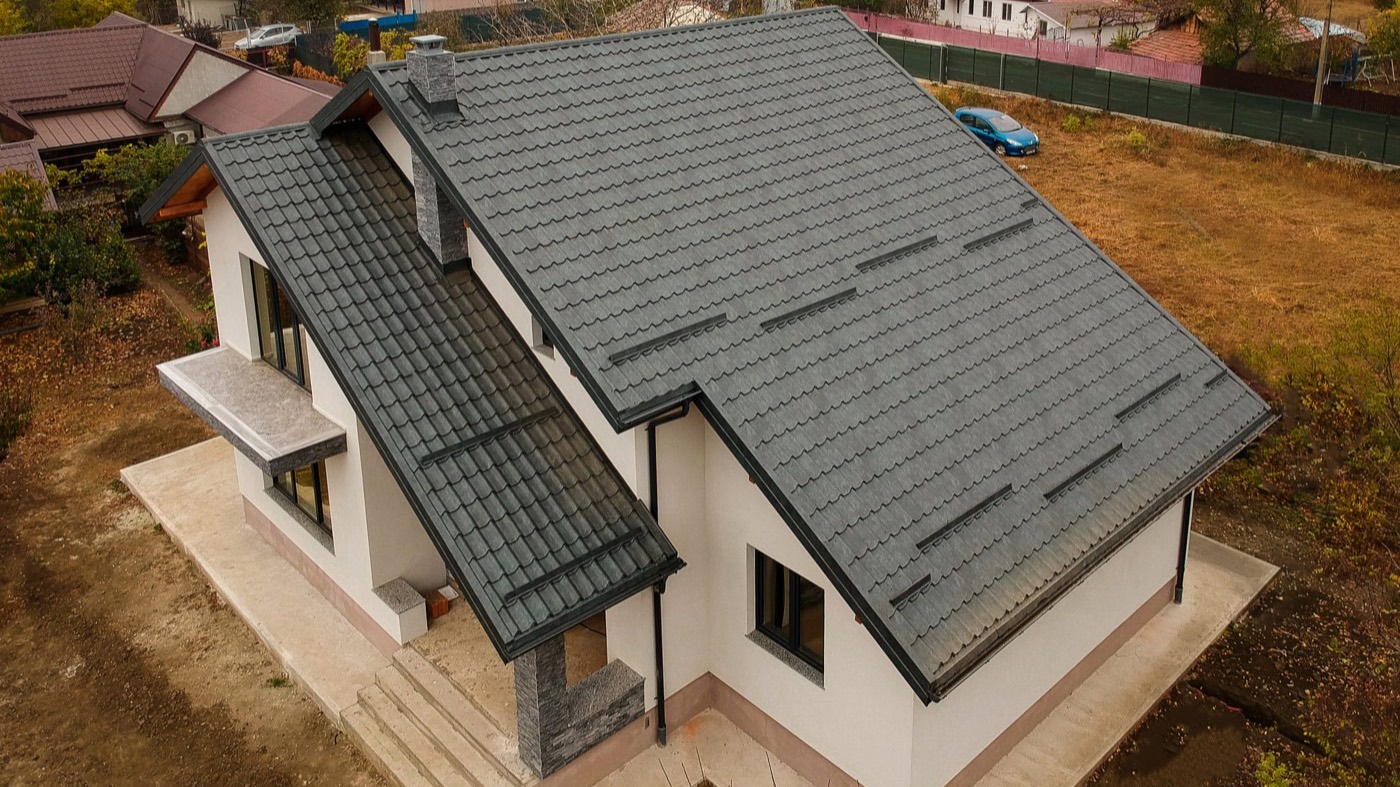
- Metal roof tiles – minimum 14°
- Click System – approximately 8–10°, depending on the roof configuration
- Standing seam roofing – as low as 3.5°, when special sealing elements are used
- Quadra / Quadra Plus metal shingles – minimum 22°
- Rombo shingles – minimum 35°
- Rondo shingles – minimum 45°
The geometry of the roof directly influences the choice of the most suitable system. Therefore, roof pitch analysis is one of the first steps when selecting a metal roofing solution.
2. Check the corrosion protection of the steel
The lifespan of a metal roof largely depends on the zinc coating applied to the steel. This is expressed in grams of zinc per square meter (g/m²).
For durable metal roofs, a coating of at least 225 g zinc/m² is recommended.
In many cases, higher protection levels are also used, such as 275 g zinc/m² (Z275)
The zinc layer provides galvanic protection against corrosion and protects the steel even when superficial scratches occur in the paint layer.
3. Choose a coating suitable for the environment where the roof will be installed
Besides galvanization, the durability of the material also depends on the type of coating applied to the steel.
Among the most commonly used finishes for roofing sheets are:
- Glossy Polyester – an economical and versatile solution
- Matt Polyester – a modern appearance with reduced light reflection
- Textured Matt Finish (BigStone) – three-dimensional surface and increased resistance
- Printech Decorative Finishes – high-durability printing technologies
Some coatings include thicker paint layers, approximately 40 microns, which can improve resistance to UV radiation and harsh climatic conditions.
4. Metal roofs should be installed in a ventilated system
A properly executed metal roof should always be installed as part of a ventilated system.
Proper ventilation contributes to:
- removing condensation;
- protecting the timber structure;
- reducing temperatures beneath the roof during summer;
- increasing the lifespan of the roofing system.
A ventilated system generally includes:
- anti-condensation membrane;
- ventilation gap;
- air circulation between the eaves and the ridge.
These elements are essential for the proper long-term performance of a metal roof.
5. Check the actual thickness of the steel
Another important detail is the thickness of the material.
For most metal roof tile and standing seam systems, the usual thickness ranges between 0.45 mm and 0.60 mm.
Thicker steel provides:
- greater rigidity;
- improved resistance to deformation;
- better structural stability.
This aspect is particularly important in areas exposed to strong winds or heavy snow loads.
6. Choose a complete roofing system
A high-performance roof is more than just metal panels. Auxiliary components are equally important for the proper functioning of the system.
A complete roofing system includes:
- ridges;
- valleys;
- flashings;
- ventilation elements;
- fastening systems;
- sealing accessories.
Compatibility between these components is essential for ensuring watertightness and long-term durability.
7. Analyze the complexity of the roof
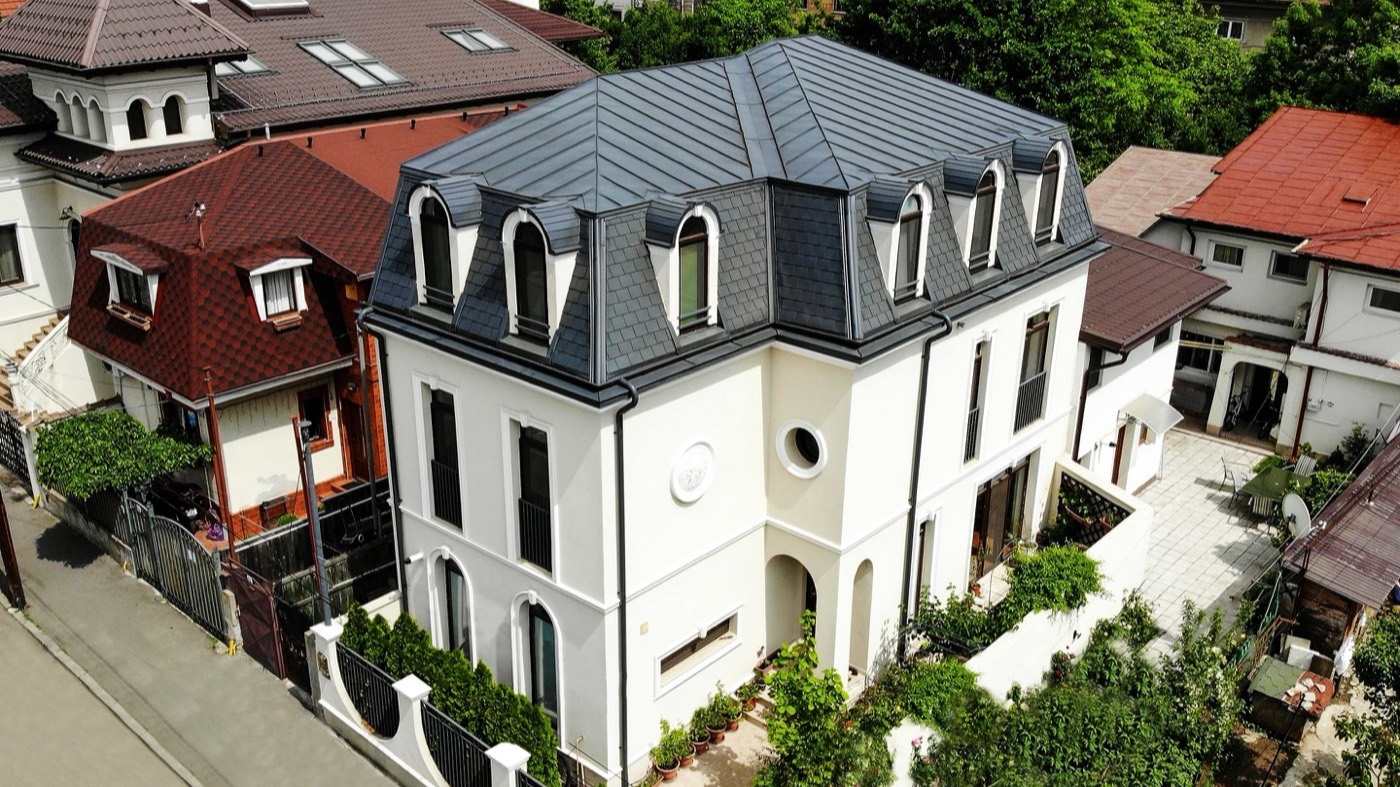
Modern roofs may feature complex architectural forms, such as:
- dormers;
- multiple intersections;
- varying volumes;
- integrated façades
In such situations, modular systems such as standing seam roofing, pre-profiled Click panels, or metal shingles offer greater flexibility and adapt more easily to complex geometries.
These systems can also reduce material waste and simplify the execution of construction details.
8. Check the origin and development of the system
In the metal roofing industry, many production machines are standard, and some products may appear similar.
The real differences arise when manufacturers invest in:
- developing proprietary concepts;
- designing their own tooling and molds;
- adapting products to local architectural requirements.
These investments may result in systems that are better suited to real-life projects and more efficient technical solutions.
9. Evaluate the warranties
A quality metal roof should include warranties covering several components of the system:
- paint coating;
- color stability;
- corrosion protection.
Under proper installation and operating conditions, the lifespan of a metal roof can exceed 40–50 years, and in certain situations may even approach 100 years.
10. Choose a technical partner, not just a supplier
Besides selecting the right material, it is important to work with an experienced technical partner.
A specialized supplier can provide:
- assistance in choosing the most suitable system;
- installation recommendations;
- solutions for construction details;
- adaptation of the system to the architectural design.
This type of support can make the difference between a durable roof and one that may generate problems over time.
Blog
Read also
Metal roof · Standing seam
Types of metal roof: metal roof tiles, click, standing seam or shingles
Metal roof · Installation
