Why a metal rainwater system is an engineering decision, not an aesthetic one
The rainwater drainage system is, in fact, an infrastructure component of the building. When correctly designed, it protects both the roof covering and the façades from the corrosive effects of improperly directed water. When incorrectly designed — or selected exclusively based on price — it generates repair costs that far exceed the initial savings.
Choosing a metal gutter system over other options available on the market is, essentially, an engineering decision: measurable service life, calculable hydraulic capacity, verifiable structural behaviour under additional loads — ice, accumulated snow and wind — and long-term system consistency. BELPROFILE metal systems are built around this logic.
What a metal rainwater system is and how it is constructed
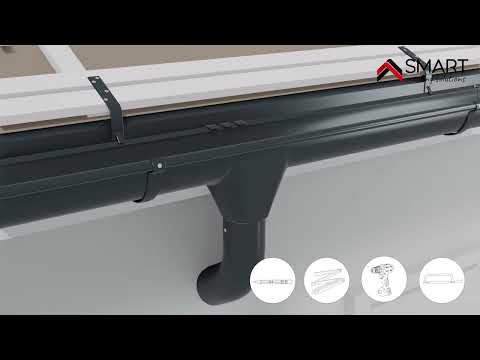
A rainwater system refers to the complete assembly of components intended to collect and discharge rainwater from the roof in a controlled manner: gutters, downpipes and all connecting elements that form a watertight hydraulic circuit. It is not a collection of individual products, but a system in which geometries, assembly tolerances and fixing methods are coordinated to eliminate the common failure points found in hybrid or improvised configurations.
In terms of material, a BELPROFILE metal rainwater system is made of galvanised steel with multilayer protection — zinc coating, primer and finishing layer. This structure provides corrosion resistance under prolonged exposure, dimensional stability during major temperature variations and mechanical resistance to impact, maintenance work or ice accumulation.
The 125/90 and 150/90 systems: the differences that matter in practice
The 125/90 metal system
The 125/90 rainwater system — with a 125 mm diameter gutter and a 90 mm downpipe — is the standard configuration for residential roofs with moderate drainage areas. A 10-metre-long gutter section with a single downpipe can efficiently drain roof areas of up to approximately 70 m².
For larger areas or complex configurations, the correct solution is either to add an additional downpipe or to switch to the 150/90 system. Its drainage capacity, high corrosion resistance and secure, watertight installation make it the standard choice for most conventional residential projects.
The 150/90 metal system and its differentiating feature: the internal curl
The 150/90 system is designed for large roofs. The construction feature that distinguishes it is the inward-rolled front edge — technically known as an internal curl — integrated into the gutter profile.
This solution is not merely a design detail. The internal curl increases the gutter’s usable volume without changing its external footprint, reduces the risk of overflow during peak flow events by actively guiding water towards the inside of the profile and facilitates the installation of corner elements by creating an additional support surface. The impact is directly measurable: higher hydraulic capacity.
The corner elements of the 150/90 system include an integrated fixing clamp and a predefined overlap area, eliminating the need for additional accessories at corner joints and significantly reducing the risk of installation errors.
Sizing parameters: what must be calculated before installation
Incorrect sizing of a metal rainwater system results either in hydraulic underperformance — overflow during heavy rainfall — or unjustified additional costs. Four parameters must be systematically assessed before making any configuration decision.
- Drainage area per downpipe: calculated as the ratio between the total roof slope area and the number of downpipes per gutter section. The recommended maximum value is approximately 70 m² for the 125/90 system and 120 m² for the 150/90 system.
- Maximum length per gutter section: requires one downpipe every 10 linear metres in order to maintain a drainage slope of 5 mm per linear metre, which is both functional and aesthetically acceptable.
- Local rainfall intensity: is important in areas with frequent convective rainfall events or maximum hourly rainfall values exceeding 50 mm/h, where oversizing or the use of overflow systems is required.
- Estimated additional load: snow, ice and leaves must be correlated with the sizing of the gutter hooks and downpipe clamps.
Common mistakes in the design of metal rainwater systems
Even in projects carried out by experienced teams, systematic errors can occur and compromise long-term performance.
The most common is an insufficient or reverse gutter slope: standing water accelerates corrosion at the joints and encourages sediment deposits.
The second is an insufficient number of downpipes: large areas drained through a single downpipe generate excessive hydraulic pressure and overflow during heavy rainfall.
The third error, less visible but equally costly, is the use of components from different systems. Assembly tolerances differ between manufacturers, and hybrid joints are common sources of leakage and mechanical failure.
Finally, inadequate fixing of downpipes to the façade — by installing clamps too far apart — creates vibrations that cause fatigue in the joints over time.
Conclusion
A correctly designed metal rainwater system, installed using components from the same system, has a service life comparable to that of the metal roof covering. The choice of profile, rigorous hydraulic sizing and system consistency from the gutter to the drainage connection ensure long-term performance — without unforeseen interventions or repair costs.
BELPROFILE provides professionals with detailed technical documentation, component lists and sizing support for projects of any complexity.