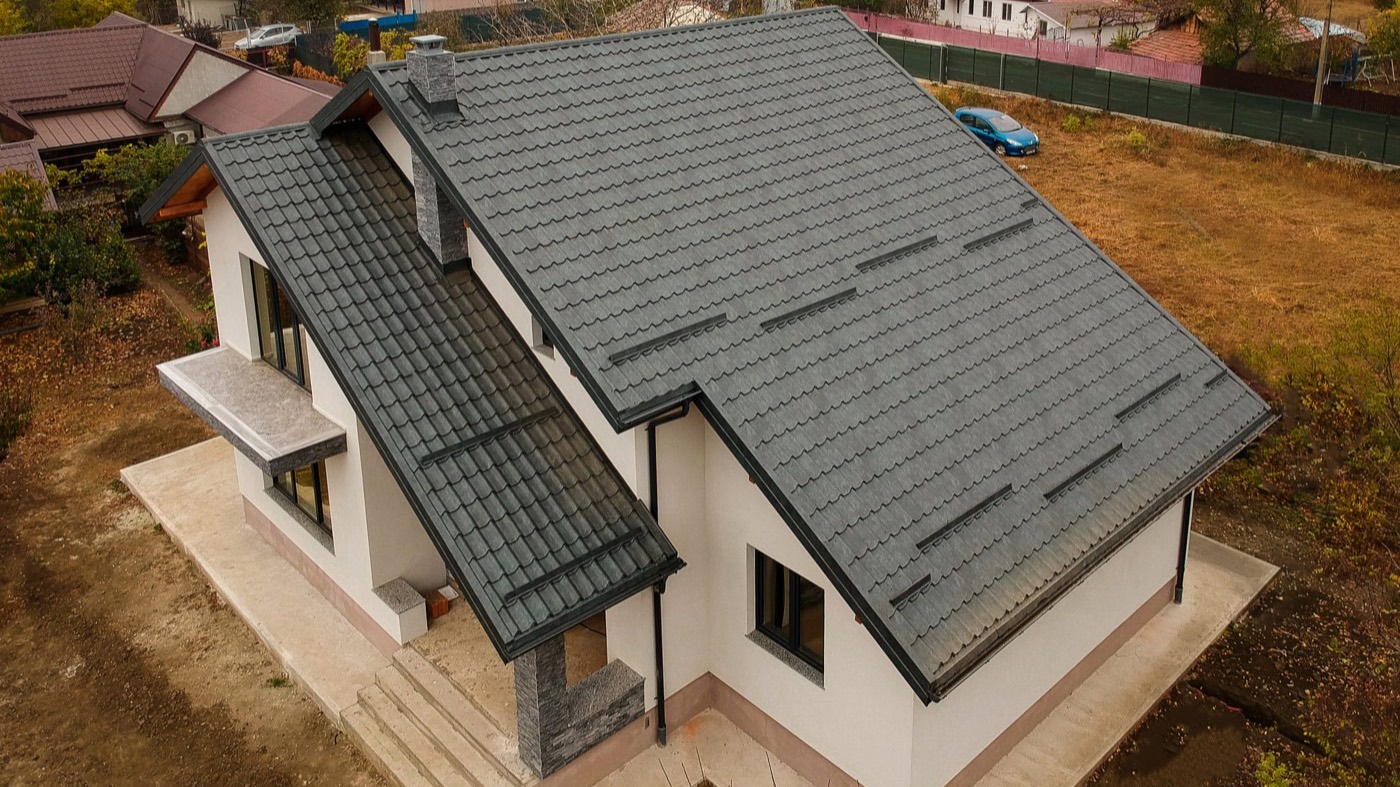
Metal roof · Warranty
The anti-condensation membrane: what it is for and why it “rains” under a metal roof
- Published:
- Author: BRAVO INTERNATIONAL RO
- 3 min read

The anti-condensation membrane goes under the sheets and protects the roof against water ingress and condensation. Because it lets vapour through, it keeps the whole roof dry. When it “rains” under a metal roof that has no hole in it, most of the time it is not rain: it is condensation, and the cause is the lack of a membrane or of ventilation.
Why does it “rain” through a metal roof?
The warm air in the house rises and carries water vapour with it. The sheets are cold, especially at night and in winter. When the vapour touches the underside of the sheets, it turns into drops, which gather and fall. From below it looks like a leak, but the water does not come from outside.
That is why a metal roof is installed as a ventilated build-up, with three things:
- an anti-condensation membrane;
- a ventilation gap under the sheets;
- air circulation between the eaves and the ridge.
What is the anti-condensation membrane for?
It is an essential component of any roof covering. It stops the water that gets under the sheets, whether from a leak or from condensation. At the same time it lets vapour through, so the whole roof stays dry.
How is the anti-condensation membrane installed?
- After the eaves flashing: the flashing goes on the timber board that supports the gutters, before the membrane, with a 5 cm overlap onto the gutter.
- With click roofing sheets installed as an unventilated build-up, the membrane is laid over the eaves flashing, at most 10 mm from its edge.
- With click roofing sheets installed as a ventilated build-up, the breather membrane is laid first, then the vertical battens and the horizontal battens are nailed on.
What goes under standing seam roofing?
A separation mat with a breather membrane: a 180 g/m² breather membrane with a mat of polypropylene filaments, 7–8 mm thick. The membrane lets vapour through, but does not let drops of water reach the inside. The mat keeps the sheet from touching the membrane, which can be damp because of condensation, and reduces the noise of the rain.
Where does the air get in and where does it get out?
It gets in at the eaves and gets out at the ridge. That is why the parts in these places are perforated: the ridge end caps, the sealing strips at the ridge and at the eaves, the “Z” and “C” profiles of standing seam roofing. The bird guard lets the air in and keeps out birds and large insects.
What do you gain with a ventilated roof?
- condensation is eliminated;
- the timber structure is protected;
- in summer, the temperature under the roof is lower;
- the roof covering lasts longer.
In short
If water appears under the sheets when it is not raining, or a few hours after a cold night, it is condensation. It is solved in the installation: an anti-condensation membrane, an air gap and ventilation from the eaves to the ridge. The anti-condensation membrane is part of the sets of accessories for metal roof tiles and of accessories for click roofing sheets. For your roof, request a quote: the advice is free.
Blog
Read also
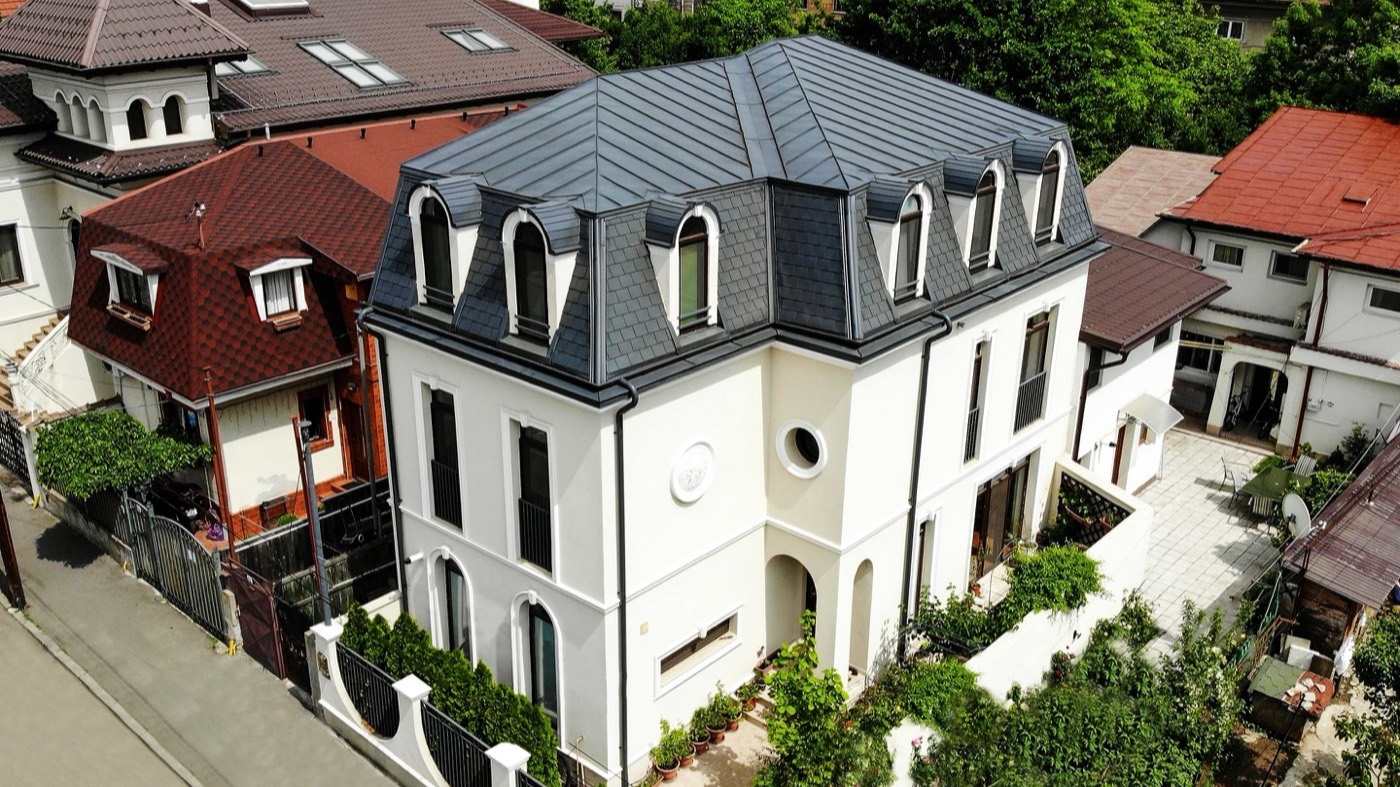
Metal roof · Standing seam
Types of metal roof: metal roof tiles, click, standing seam or shingles
Metal roof · Installation
